

A look back. There's a saying on the social internet.
"Never skip low quality videos."
This refers to videos that went viral in the Bluetooth era. Most phone cameras were poor quality and saved in 3GP format. But the ones that went viral were genuinely good and funny. None were created for "reach" or "optimization." People just wanted to record moments and show them to friends. Bluetooth picked it up from there, and these videos spread across regions, countries, and languages. The ones that survived became nostalgia today. Those grainy videos evoke such memories because they spread purely on merit, not because an algorithm pushed them.
The logic behind this is the Transfer Filter. Sharing a video or photo wasn't just tapping "forward." You had to stand next to your friend, pair devices, and wait 2 to 10 minutes for a few MB to transfer. Memory cards were 512MB or 1GB max. So we didn't keep trash or mediocre content on our phones, only curated stuff worth keeping.
If a video survived being transferred phone to phone across regions, languages, and countries, it earned its place. There were no bots to like or comment, no algorithms to push it. It spread only because actual humans thought it was funny enough to waste battery and storage space on.
Who pulls the strings
Today's algorithmic feeds eliminated that friction entirely, but replaced human curation with corporate control. Sure, algorithms filter out trash content and remove dangerous topics. They surface new and trending stuff for you to consume. But they're also closed source. A small team managing the algorithm can pull the strings and control what millions of people see. When engagement drops, they can push ragebait content. That creates more comments, more views, more opportunities for ads. It maintains bubbles based on topics. Some bubbles are fine. Others push people toward extremes.
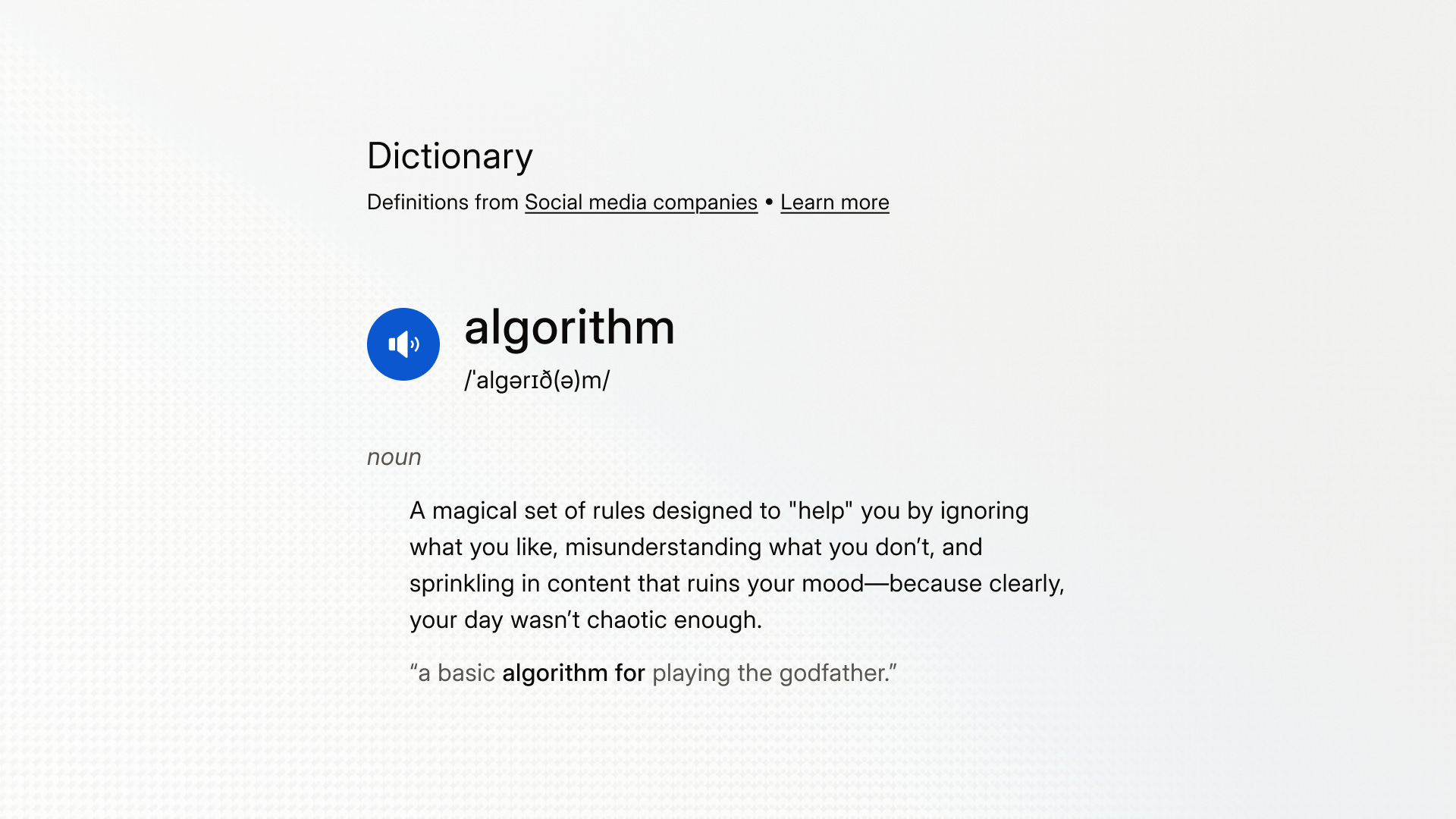
Because everyone can post anything, there's no shortage of content. But there's always a shortage of quality. Platforms introduced remix features to squeeze the last bit of juice from any trending content. It used to be fun and creative. Now we're tired of the repetitions. We want something new with every scroll. That's doom scrolling. These feeds trained us to expect endless novelty, whether it's social media, news, streaming, or shopping.
The pressure to earn money from these platforms made going viral the only goal. You have to constantly produce fresh content, no matter how you get it. Scripted videos, ragebait, reaction clips, whatever works.
This pressure extends beyond creators to everyone consuming content. You have to stay on constant alert for everything happening online. The age of hearing or reading a fact based summary of what happened is gone. Now it's live 24/7. It doesn't matter if it's true or false. All that matters is: "Is this new?" We've traded the Transfer Filter for the speed filter, where being first beats being right.
There's even a weird flex about it now. Send someone a meme, video, or news and they'll hit you with "You're only seeing this now? I saw it days ago." As if being first to scroll past something makes you special. That's what the algorithmic feed does. It turns consumption into competition.
Something related
Variety | Source
Other blog
Algorithm - https://romio.substack.com/p/algorithm